Between Worship and Preservation: The Case for Church Monitoring

Updated: May 2
This post is also available in Norwegian (Norsk) There's something humbling about standing in a church that has weathered centuries. The worn stone steps, the stained glass that has filtered light for generations, the wooden pews smoothed by countless hands. But what keeps them standing? What allows a 12th-century fresco to survive into our digital age, or prevents a medieval timber roof from succumbing to the elements?
Historic churches occupy a singular position in cultural heritage preservation. In Norway, where Bev/Art is headquartered, approximately 3,000 churches have been built over the course of recorded history. Of the 1,620 church buildings currently affiliated with the Church of Norway alone, many contain heritage spanning centuries. The country's 28 remaining medieval stave churches — out of an estimated 1,000 built in the Middle Ages — represent an even more dramatic loss.
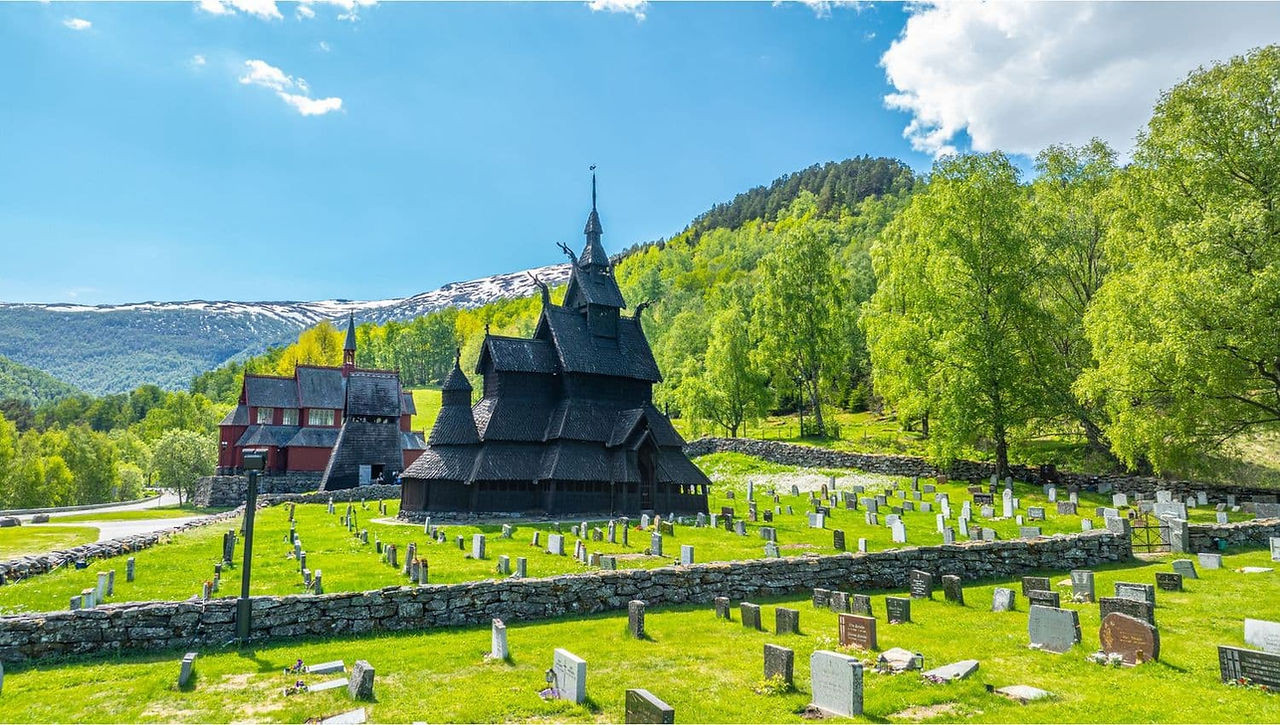


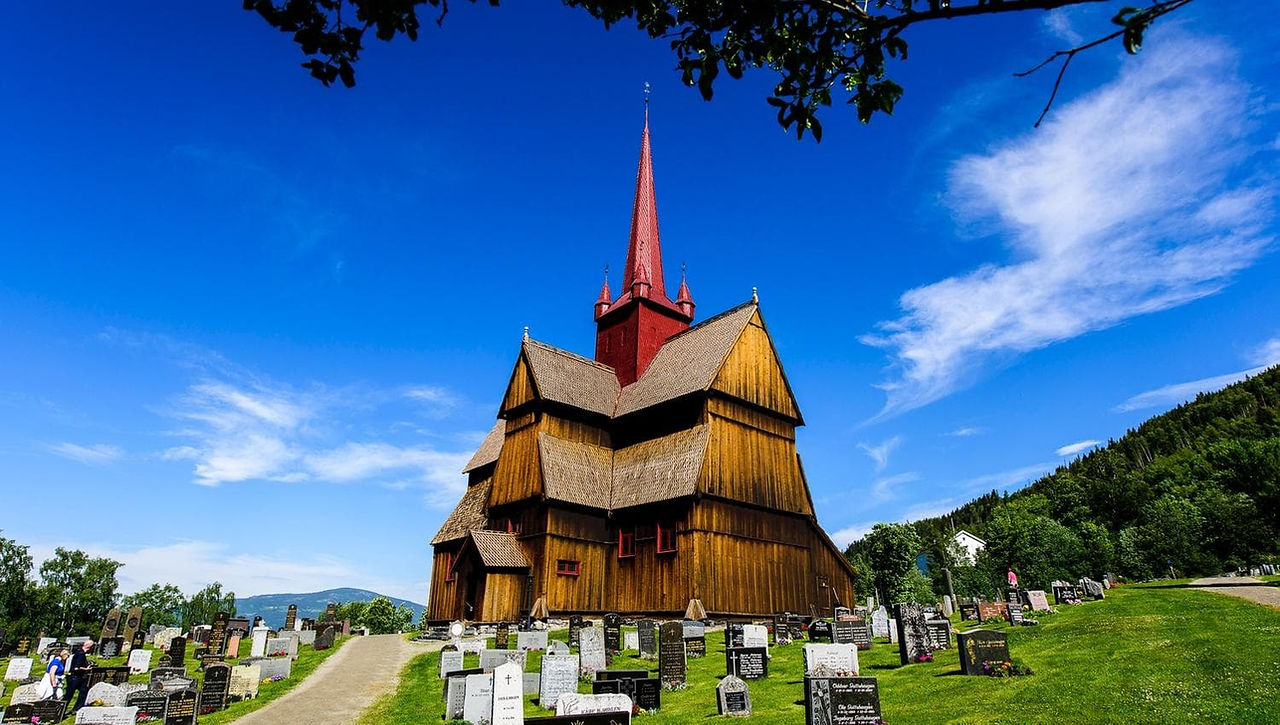


This pattern extends across Europe. The National Churches Trust documents nearly 20,000 listed churches, chapels and meeting houses still in active use across the United Kingdom. In Italy, an estimated 95,000-100,000 buildings serve Catholic worship, of which at least 85,000 are classified as cultural heritage.
Many of these structures contain centuries of accumulated artistic and architectural heritage within buildings never designed for their protection. The resulting environmental challenges demand approaches that respect both sacred function and physical fragility.
The Material Record
In a Norwegian church, for example, you may find carved timber, painted surfaces and decorative elements that mix Christian iconography with Viking-era traditions inside a single church.
Even younger churches may house medieval liturgical objects, textiles spanning centuries, and structural elements that predate modern preservation theory.
Each of these materials responds to environmental conditions according to its own physical properties: wood swells with moisture and contracts when dry, paint layers on panels or walls develop stress fractures when humidity fluctuates, stone weeps salts to its surface under certain conditions, textiles degrade and metal corrodes. The complexity multiplies when these materials exist side by side, each requiring different conditions but subjected to the same atmosphere.
“Many of these buildings and the items within them have acclimated to their environment and climate conditions,” says Christian Nielsen, Co-Founder and COO of Bev/Art. “What’s different – and pressing – today is the changing climate and resulting unknowns. For example, warmer winters closer to the melting point of 0°C mean more snow melting to water and refreezing. This can lead to increased mechanical strain, which increases the chance of flooding.”
Nielsen points to another challenge: changing usage patterns. Medieval churches maintained relatively stable conditions through daily services and continuous occupation. Today, many of these same buildings sit empty except for occasional gatherings. The result is dramatic thermal cycling of extended periods of cold followed by rapid heating before services. Gradual temperature adjustments would be preferable for conservation, but energy costs and consumption make such approaches impractical for many sites.
Further to this, the architectural features that make churches spiritually compelling — volume, height, thick walls and large windows — create microclimates within microclimates. Temperature stratification means the air 20 meters overhead may be significantly warmer than the air at floor level, but damp air is lighter than dry air at the same temperature and also rises. Relative humidity varies accordingly.
Human Presence, Environmental Consequence
Now, layer human activity. A well-attended service transforms the interior environment. Research on microclimate fluctuations in churches has documented how visitor presence creates measurable atmospheric events. Body heat, respiration and the movement of air through opened doors all introduce variables that stress materials already adapted to specific conditions.
A church heated intermittently for Sunday services undergoes thermal cycling that creates expansion and contraction in structural materials. Studies measuring temperature and humidity in historic churches have found that antiquated heating systems can create dangerous fluctuations, with temperatures rising dramatically in upper spaces while relative humidity drops to levels that threaten wooden objects and painted surfaces. When heating systems turn on and off frequently, they destabilize environments that may have remained relatively stable for decades.
This creates what conservators recognize as a preservation paradox. Many churches are not abandoned structures, they must serve their communities. Services will be held, weddings celebrated, funerals conducted. The buildings cannot be frozen in time, yet each use introduces risk.
The Limits of Observation
Traditional stewardship relied on what could be seen and felt. Caretakers noticed condensation, detected musty odors and observed when surfaces appeared damp. This experiential knowledge remains valuable — no data logger can replace the institutional memory of someone who has tended a building for years. But experiential knowledge has limits.
"Historic churches are facing unprecedented environmental challenges," continues Nielsen. "Climate change means more extreme weather events, more dramatic temperature swings and longer periods of high humidity. Caretakers need insight into how changing climate and weather patterns affect their buildings and the objects inside them — not to respond to immediate alerts, but to make informed long-term decisions based on accurate data."
The patterns that threaten heritage materials often become visible only over time. A conservator needs to know not just that the air feels damp on a given Tuesday, but whether humidity has been cycling above safe thresholds for three weeks. They need to understand whether the new ventilation approach actually stabilized conditions or simply shifted the problem to a different season. They need evidence that can distinguish between normal fluctuation and concerning trends.
Continuous monitoring provides what intermittent observation cannot: a temporal record. It reveals that the choir is consistently five degrees cooler than the nave, creating conditions that may be affecting specific objects. It shows that humidity spikes predictably when heating cycles on after weekend shutdown. It documents whether interventions work.
Information, Not Prescription
Environmental data should not be confused with environmental control. Monitoring tells you what is happening; it does not dictate what to do about it. A humidity reading exceeding 70% for two weeks does not automatically prescribe dehumidification. A temperature drop following ventilation does not mandate changes to heating schedules. These remain human decisions, requiring judgment about building systems, congregation needs, budget constraints and preservation priorities.
What data provides is clarity for decision-making. Should heating run overnight or cycle on before services? The answer depends partly on how each approach affects interior conditions, information that monitoring can provide. Is the new roof insulation creating condensation problems? Sensors can document whether moisture levels changed after the work. Are funds better spent on improved ventilation or upgraded heating? Evidence about current conditions helps answer that question.
"We don't protect artwork," Nielsen notes. "We give conservators the information they need to make informed decisions about how best to care for collections in their specific circumstances."
For churches operating with limited resources — which is most churches — this information becomes particularly valuable. It enables preventive maintenance rather than emergency intervention. It also helps prioritize spending by providing the evidence needed to justify capital improvements to church committees or grant-making bodies.
Discreet Presence
The monitoring itself must respect what is being monitored. A Gothic cathedral is not a laboratory, meaning the solution cannot be more intrusive than the problem it addresses. Listing regulations may prohibit drilling into historic fabric, and aesthetically, conspicuous modern equipment disrupts the character of sacred spaces. Practically, installations requiring extensive cabling or structural modification often prove impossible.
Effective monitoring in these contexts requires equipment that remains nearly invisible: small sensors that blend into architectural details; wireless systems that avoid running cables through medieval stonework; technology that gathers essential information without announcing its presence to worshippers or visitors.

The goal is not to transform churches into museums. It is to help those responsible for these buildings understand them well enough to keep them functioning as what they are — living spaces of worship that happen to contain irreplaceable heritage.
Modern Solution Considerations
The physical realities of historic churches shape what monitoring approaches can work. Many lack WiFi infrastructure entirely, making cellular connectivity essential. Power interruptions, common in older buildings with aging electrical systems, require systems capable of storing data locally and syncing when connectivity returns, preserving the continuity of the environmental record.
Effective church monitoring demands more than technical capability. The equipment must remain discreet, respecting the character of spaces where visibility matters. Wireless systems avoid the drilling and cabling that heritage regulations often prohibit. The data itself must be accessible to those without specialized training — church wardens and conservators need clear insights, not complexity.
Perhaps most critically, interior climate data gains meaning only in relation to outdoor conditions. Understanding how external weather patterns influence what happens inside a building forms the foundation of conservation planning. In Norway’s newest program, regulations require 13 months of correlated interior and exterior climate data before major conservation projects can proceed — recognition that informed decisions require seeing the complete picture of how buildings respond to their environments over time.
"The constraints of historic buildings shaped how we built our system," says Martin Barthel, CTO at Bev/Art. "Cellular connectivity for buildings without WiFi, local data storage for when power fails, automatic weather integration for long-term analysis, and the smallest available environmental monitoring sensors. These aren't features — they're responses to what spaces like these require."
Continuous Custodianship
Historic churches have survived because people cared for them. Each generation of caretakers has worked with the knowledge and tools available to them, doing what they could to pass these buildings forward intact. The timber roof installed in 1320 endures because someone in 1450 noticed it needed attention, and someone in 1680, and someone in 1850, and so on through to today.
Contemporary custodians have access to tools their predecessors lacked. Environmental monitoring doesn't replace the experience and judgment that have always been essential to preservation. Rather, it supplements them, making visible what was previously invisible by providing evidence where there was once only intuition.
The work itself remains unchanged in character: patient, incremental, persistent. Monitoring a church won't necessarily make for dramatic before-and-after photographs, but it represents one of the quiet, essential practices that allow buildings to continue their work across centuries.
The church that has weathered 800 winters will weather the next one. But it will weather it better if those responsible for it can see what the weather is actually doing. --- Photo credit: Stave Church images from Visit Norway, https://www.visitnorway.com/typically-norwegian/stave-churches/ BEV/ART AI Responsible Use Disclosure: Google Gemini (Enterprise) was used for for translation support and Claude.ai for select copyediting.